Wavey on GitHub: a commercial grade open source IVI reference platform

The automotive industry has historically been a walled garden, with proprietary technology guarded closely behind closed doors. Today, Spyrosoft is breaking that tradition. We’re proud to announce the official release of Wavey. Wavey, a fully functional In-Vehicle Infotainment (IVI) system, is now available on GitHub for you to explore, learn from, and build upon.
You can find it on our GitHub.
Whether you’re an automotive engineer, system architect, or technology enthusiast, you now have access to a commercial grade reference implementation that demonstrates how complex automotive software can be structured.
This is, to our knowledge, the first automotive IVI project of this calibre released entirely as open source. You can now access the same architectural patterns and engineering decisions that power production systems, helping you accelerate your own innovation and development.
More than just code: what you’ll find in Wavey?
You won’t find just a collection of scripts here. Wavey gives you a comprehensive, thoughtfully engineered system that fuses high end design with robust technology. The architecture prioritises vendor independence, so you can swap platforms, operating systems, or UI technologies without rewriting your entire system. Hardware, OS, and HMI layers are clearly separated, giving you the flexibility to adapt the solution to your specific needs.
The system is built upon a sophisticated technical stack designed to meet the rigorous demands of modern automotive standards. Here’s what you can work with.
The hardware foundation
While validated on Qualcomm SA8155P, the architecture is hardware agnostic, so you can port it across automotive grade SoCs. You’ll see how to support advanced features like surround view monitoring and complex audio integration, and you can explore implementations using different operating systems, including the QNX Hypervisor and Android Automotive. The Qualcomm implementation is just one example, not a limitation.
The interface
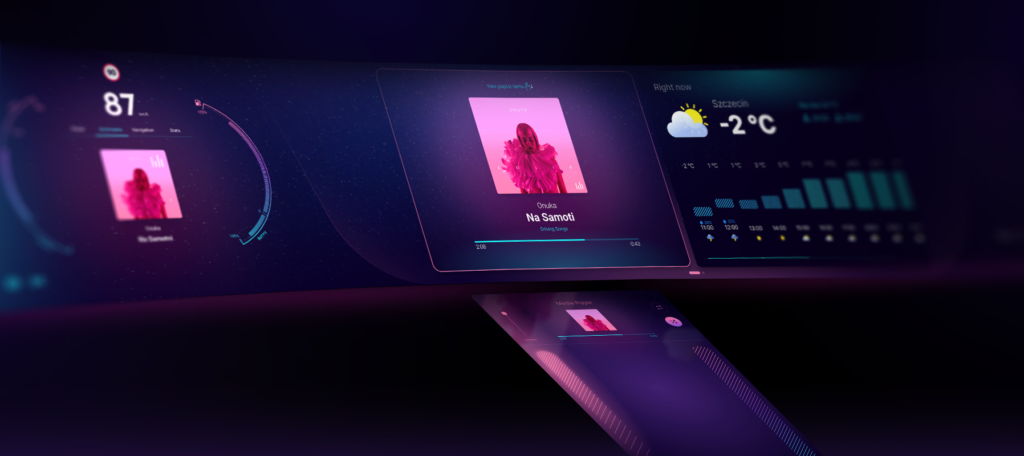
Want to understand how to scale interfaces to large displays? The reference implementation runs across a cinematic 41″ wide bar screen acting as the main cockpit, supported by a 15″ touch panel. This setup demonstrates how you can architect for large, immersive HMI layouts.
MicroHMI architecture
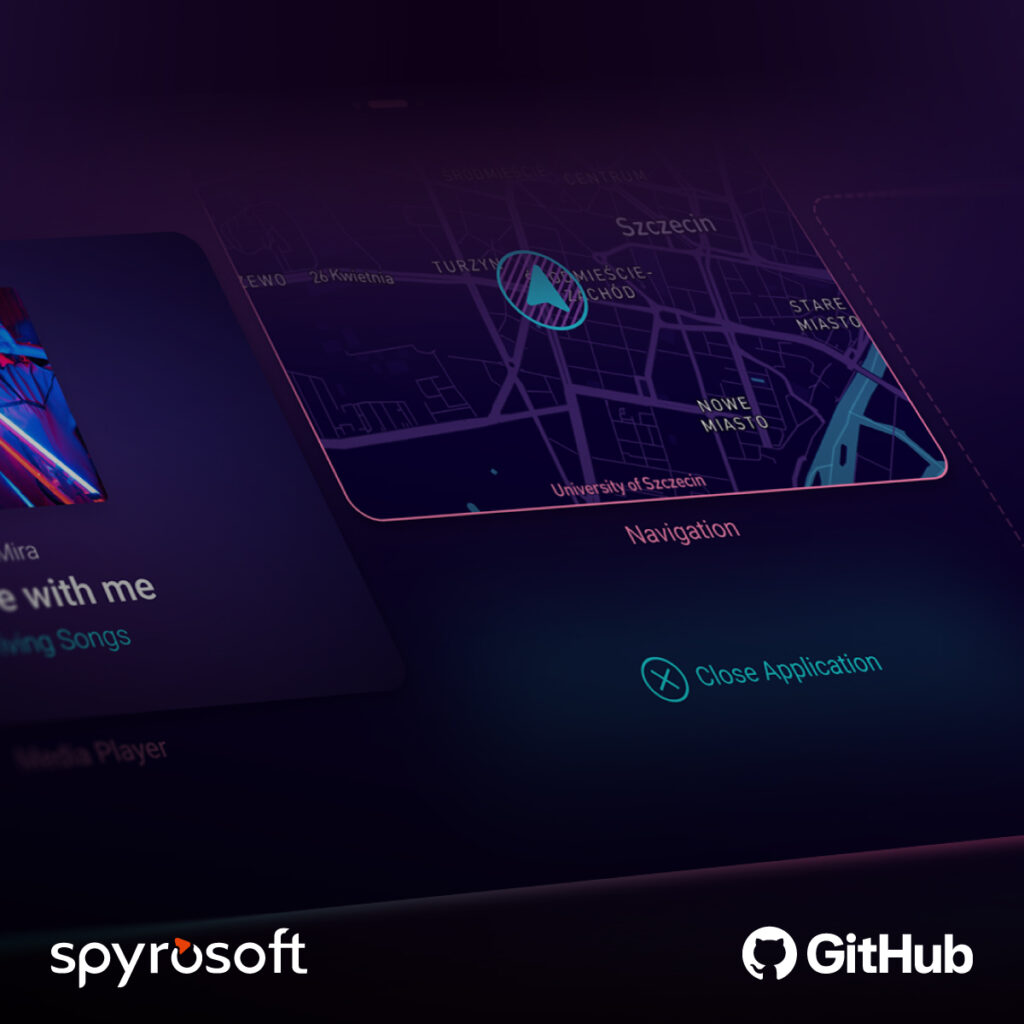
You’ll discover a multimodal HMI platform that combines large touch surfaces with gesture control, with room for you to add future multimodal interaction models. This reduces driver distraction and enables safer interaction models. Instead of monolithic structures, you can explore a MicroHMI based architecture that breaks the system into atomic, isolated human machine interfaces, much like microservices.
This means you can create, test, deploy, and update different modules independently. Your teams won’t have to wait for each other to implement changes, drastically increasing your development pace. It’s a vital strategy if you’re developing Software Defined Vehicles (SDV) at scale.
Android Automotive 11 and custom UX
Built on Android Automotive 11 OS, the system shows you how to leverage mature middleware and a rich application ecosystem without settling for a generic tablet look. You can see how to create custom interfaces that help your brand maintain its unique image while discovering new User Experience patterns.
Powered by Qt
As a core technology, we utilised Qt, a suite of cross platform libraries and SDKs. To maximise efficiency, we employed specific components including the Qt Interface Framework, Qt Application Manager, and Qt for Android Automotive.
Why share this level of detail? Because you deserve access to quality engineering examples. As Przemysław Krzywania, our Director of HMI puts it:
I’m incredibly proud of the work the team put into Wavey. We didn’t want it to just sit on a server somewhere. We wanted to get it out there. Sharing our code is our way of saying we’re confident in what we do. It’s better to be open and share knowledge than to keep everything under lock and key.
Discover how our teams can support your vision.
Learn moreWhat you can achieve with this repository
As a developer, architect, or automotive enthusiast, you now have a rare educational resource at your fingertips. You can look under the hood of a professional automotive system and understand exactly how it works.
Dive into the codebase to discover solutions for complex challenges inherent to the automotive environment. You’ll find practical approaches to robust media handling, seamless navigation integration, and vehicle setting management that you can apply to your own projects.
A contribution to the community
Access to commercial grade examples shouldn’t be locked away. The open source community drives the industry forward, and you’re part of that momentum.
This release strengthens the Qt ecosystem you’re already working in. As a global software leader present in over 70 industries, Qt powers millions of devices worldwide. Through our partnership with The Qt Company since 2022, we’re committed to enhancing the technology you use every day.
Making Wavey public means you benefit from improved services and lower barriers to entry. You get a real world demonstration of Qt’s capabilities in an automotive scenario, helping you evaluate and implement solutions faster.
Your foundation for next generation HMI
The automotive industry is evolving rapidly, and you need architectural patterns that keep pace. Wavey demonstrates how you can move towards next generation solutions, focusing on MicroHMI and MultimodalHMI interfaces that break down the monoliths of the past.
Again, you can find it here.
A well designed, comprehensive IVI system remains the cornerstone of automotive UX. You can use Wavey as your reference point, a solid example of engineering and design principles in action. Even as you move towards microservices, understanding the holistic architecture will strengthen your automotive development expertise.
Ready to accelerate your HMI development?
Przemyslaw Krzywania
HMI Director
arrow_circle_right Our blog